JELLO and the Patisserie of Versailles
Updated: 4 days ago
Before JELLO became a glass object, it was a collection of pictures in my head: old cookbooks, extraordinary desserts and the banquets of fairy tales and films. Beauty and the Beast, Alice in Wonderland and Sofia Coppola’s Marie Antoinette, with its pastel cakes and sweets at Versailles, were all part of it.

photo by Anne Deppe
Jellies as temporary sculptures
Researching the history of cakes and jellies, I found out how much effort once went into desserts. In wealthy households, elaborate jellies were brought to the table as temporary sculptures, shaped in English and French copper moulds with towers, ribs and domes, while traditional German cast-iron Gugelhupf moulds, often named by their capacity in litres, became the models for the two largest JELLO shapes.

photo by Anne Deppe
Glass instead of sugar
Glassmaker Torsten Rötzsch blows the large JELLOs directly into the antique cast-iron moulds. For the smaller ones, plaster moulds are made in my Berlin studio, using historic copper dessert moulds as models. Transparent colours look like fruit jelly, opaque ones like cream, custard or milk pudding.
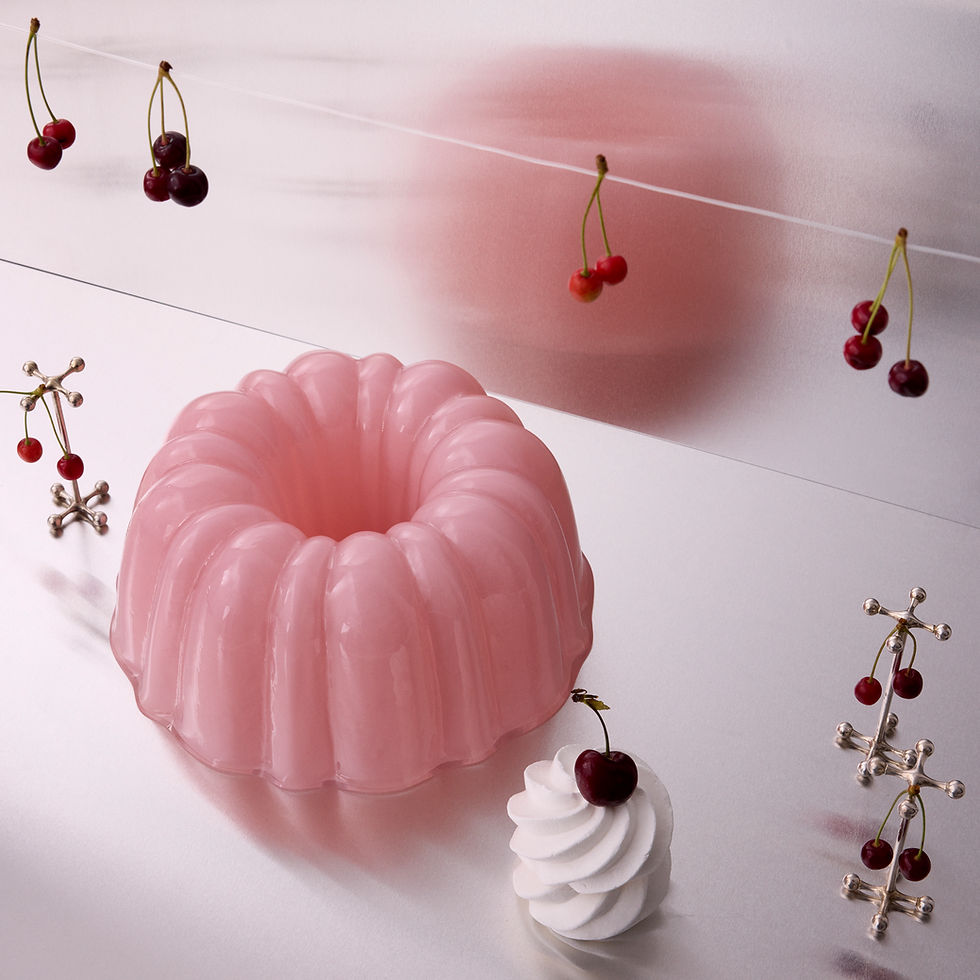
photo by Anne Deppe
A cake at Versailles was gone by the evening. A JELLO stays: on a dressing table over jewellery, on a sideboard over pralines, or simply as a little piece of patisserie made of glass.


