
Photo: Anne Deppe
photo by Anne Deppe
JELLO
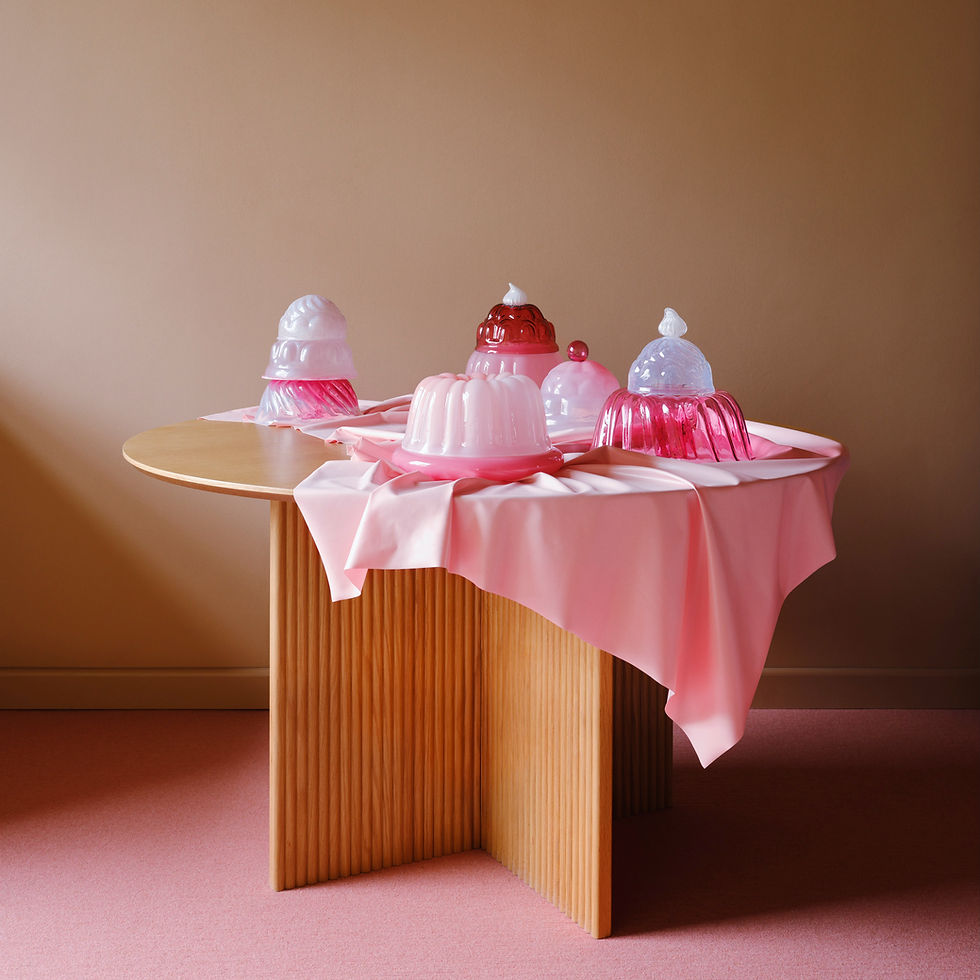
Hand-blown glass cloches inspired by historic jelly moulds and European dessert culture. Mouth-blown in Germany, cut and polished in the Czech Republic.



HEADLINE
Text
HEADLINE
Text
HEADLINE
Text
Inspired by historic jelly moulds
The idea for JELLO began with Friederike’s fascination with historic table culture, old cookbooks and extraordinary desserts, and her wish to make a playful object for the dressing table, somewhere to hide jewellery and cosmetics. Stories and films such as Beauty and the Beast, Alice in Wonderland and Sofia Coppola’s Marie Antoinette were also part of this world of references. The idea soon grew beyond the dressing table: glass puddings that recall childhood memories, feasts and fairy-tale banquets, sitting on coffee tables or at the centre of a dining table, covering chocolates, sweets, fruit or small cakes, or simply hiding little treasures.
Research into the history of cakes, desserts and sweet and savoury jellies first led Friederike to the moulds that would become the two largest JELLO shapes: traditional German cast-iron Gugelhupf moulds. These were made in different sizes, often identified by their capacity in litres. A very German way of organising cakes, perhaps. English and French copper dessert moulds opened up a more extravagant world of shapes. In wealthy households, elaborate jellies were brought to the table as temporary sculptures.
From the beginning, Friederike wanted to make these objects in glass. She had already worked with German glassmaker Torsten Rötzsch on her CANDY collection. Transparent coloured glass seemed an obvious way to capture the appearance of jelly, while the opaque colours used in European glassmaking offered just the right shades for creamy puddings.
All of this led to a design that also reflects the idea that the joy of a cake or jelly might only last an afternoon, while JELLO can keep a little of that pleasure around for longer.


video and photos by Christoph Musiol
Hand-blown glass craft
Glassmaker Torsten Rötzsch makes the JELLOs in his workshop near Meissen, Germany, a town closely associated with the beginnings of European porcelain. For JELLO, he and Friederike began experimenting with the old baking moulds she had found, seeing how their shapes would translate into glass.
The large JELLOs are blown directly into antique cast-iron Gugelhupf moulds. For the smaller pieces, plaster moulds are made in the Berlin studio, using historic copper dessert moulds as models. This keeps the copper originals intact and allows new plaster moulds to be made when the old ones wear out.
During the first tests, some of the cast-iron moulds still smelled of butter when the hot glass touched them. A lovely connection to their past lives.
After blowing and cooling, the pieces travel to Petr Slavík in Nový Bor, a town with a long glassmaking history in the Czech Republic. Petr cuts open the forms, grinds the rims and finishes the edges. Each JELLO passes through several pairs of hands, with each workshop contributing a different part of the process.
Colours, shapes & sizes
Both transparent and opaque glass colours are used for JELLO. Some resemble clear fruit jelly, while others look more like cream, custard or milk pudding. Working with these colours is an ongoing and particularly fun part of developing the collection, with new combinations tested at the furnace.
Torsten starts with a gather of clear molten glass and adds a thin layer of coloured glass before blowing it into the mould. The colour comes from glass rods made specifically for glassmaking. For the smaller JELLOs, he also shapes and attaches a glass cherry by hand.
There are five sizes: S, H, M, L and XL. Their proportions come from the original dessert and baking moulds. Some are low and wide, others tall, with ribs, curves or pointed tops.
The mould gives the glass its basic shape, but each piece turns out a little differently. The thickness of the glass, the colour and the shape of the cherry vary slightly, even between pieces made in the same mould.


photo by Anne Deppe


photo by Anne Deppe


photo by Anne Deppe

photo by Angela Blume
JELLO at home
The original idea of hiding jewellery and cosmetics under a glass pudding is still part of JELLO. But there are plenty of other things to put underneath: chocolates, fruit, a small cake or something personal you would like to keep out of sight.
They can also simply sit on a table or shelf, with nothing underneath. Arranging several together feels a little like setting out a dessert buffet. Some sizes can be stacked, which brings the idea back to cakes, this time a tiered celebration or wedding cake. Several JELLOs have already found their way into homes as wedding gifts.
The collection is still growing. Alongside new colours and shapes, Friederike is currently working on turning some of the JELLO forms into lights.


